Portfolio & Projects

Things I have built.
Things I am building.

Each project here started with a problem I felt personally - and a conviction that the right solution didn't exist yet. This is how I think, create, and add value.

01 - Venture Concept

MUSA

Beverage Brand • Brand Strategy • Market Positioning

Brand Identity Competitive Analysis Go-to-Market Latin America
MUSA can  -  Yerba Mate + Electrolytes

It started with a mate gourd. Growing up in Buenos Aires, yerba mate wasn't a wellness trend or a specialty coffee alternative - it was a daily ritual. You share it with your family in the morning. You pass the gourd between teammates after a game. You drink it with ceremony.

Years later, training hard as a rugby player in Miami, I kept looking for an energy drink that didn't feel like punishment. Everything I found was either loaded with sugar, over-caffeinated to the point of anxiety, or tasted like a chemistry experiment. The "clean" options were expensive and boring. Nothing felt like something I actually wanted to drink.

The insight: Yerba mate's caffeine profile is genuinely different. It's not coffee - the energy is moderated by naturally occurring theobromine and theophylline, which means sustained, smooth performance without the spike and crash. Athletes have known this in South America for decades. Nobody had built a mainstream product around it that was also performance-focused and premium-positioned.

MUSA product line  -  five can designs: Blueberry, Lime, Mate, Citrus, Peach Product Design - MVP Range
MUSA product line enlarged

MUSA was born from that gap. The concept: a premium beverage combining the unique energy profile of yerba mate with electrolytes, built for athletes and health-conscious young professionals who are done settling. The name comes from the Spanish word for "muse" - the creative spark, the thing that gets you moving.

The brand: MUSA is not a Latin American novelty brand - it doesn't lean on flags and folklore as a substitute for positioning. The identity is premium and minimal: clean lines, understated typography, a palette anchored in deep greens and off-whites. The Latin American roots are there, in the origin story and the ingredient, but they're treated as a strength, not a costume.

The work: I built a full brand positioning exercise - mapping the competitive landscape against Celsius, Liquid IV, LMNT, and Monster. I identified the white space: premium-positioned, athlete-focused, differentiated by a genuinely interesting ingredient story. I developed the product concept, value proposition, brand identity guidelines, and a go-to-market hypothesis focused on college athletes and fitness communities as early adopters. MUSA taught me that the strongest brand ideas come from lived experience, not whiteboards.

01 - Ingredient

Sustained Energy, No Crash

Yerba mate's caffeine is moderated by theobromine and theophylline - the same compounds in dark chocolate. The result is smooth, extended energy without the spike-and-crash of synthetic stimulants.

02 - Market Gap

Premium + Performance Whitespace

The market had cheap energy drinks and expensive wellness products. Nobody had built a premium, athlete-focused brand around a genuinely differentiated ingredient. MUSA occupies that intersection.

03 - Positioning

Origin as Strength, Not Costume

Argentine roots inform the product authentically - mate is a lived ritual, not a marketing device. The brand identity is minimal and premium; the story is where the Latin American heritage lives.

04 - Target

Athletes & Health-Conscious Professionals

Primary: ages 18–35, active lifestyle, done compromising on what they put in their body. College athletes and fitness communities as early adopters - then broadening to urban professionals.

05 - Product

Yerba Mate + Electrolytes

Natural caffeine from yerba mate extract, electrolytes for hydration, no artificial sweeteners. Five MVP flavors: Blueberry, Lime, Mate, Citrus Salt, Peach - each positioned for a different use occasion.

06 - Brand

Minimal Identity, Maximum Conviction

Clean can design. Understated typography. No mascots, no neon, no chaos. The brand says: this product is serious about performance and serious about design. It looks like something you'd be proud to hold.

Brand Price (12 oz) Caffeine Source Electrolytes Positioning
MUSA ~$3.50–4.00 Yerba Mate (natural) Yes Premium Athlete
Celsius ~$2.19–3.49 ~200mg (synthetic blend) No Fitness / mainstream
Liquid IV ~$1.90/stick None Yes Hydration / wellness
LMNT ~$2.50/stick None Yes Keto / performance
Monster ~$2.00–2.50 ~160mg (synthetic) No Mass market / gaming
Guayakí Yerba Mate ~$3.49–4.00 ~80mg (natural) No Wellness / organic

Phase 1 - Seed

College Athlete Communities

Target Division I and club rugby, soccer, and CrossFit communities in Miami, Austin, and New York. Product seeding through athletic trainers and team captains. Build authentic word-of-mouth before any paid spend.

Phase 2 - Build

Limited Drops & Fitness Retail

Seasonal flavor releases tied to sports cycles. Partnership with boutique fitness studios (F45, Barry's, local CrossFit boxes). Limited city-edition cans to create scarcity and cultural cache in target markets.

Phase 3 - Scale

Athlete Partnerships & Broader Retail

Signed endorsements with mid-tier athletes who genuinely use the product. Regional expansion into Latin American markets where yerba mate has existing cultural equity. Enter specialty retail (Whole Foods, Erewhon) over mass-market channels.

Phase 4 - Platform

"Not Built for the Weak" Brand Campaign

Aspirational campaign anchored in performance culture - not machismo, but discipline. MUSA as the drink of people who take their training and their recovery seriously. Content-first, athlete-led, community-amplified.

02 - Platform in Development

Wallstreet.ai

Finance • AI • Career Preparation

Product Strategy AI / LLM Finance Recruiting LATAM Access

Finance recruiting nearly broke me. Not because I wasn't capable - but because the system isn't built for people like me. No alumni network from a target school. No older brothers who interned at Goldman. No prep course that anyone in my circle had taken. I had to figure it out at 11 PM, watching YouTube videos and decoding Reddit threads the night before first-round interviews.

That is not how this should work.

The problem: The information asymmetry in finance recruiting is staggering. Kids at target schools with prep resources, alumni mentors, and institutional knowledge walk into recruiting season with a fundamentally different toolkit than first-generation or international students. The result is that finance careers disproportionately go to candidates who were already well-resourced - which is not meritocracy. It's a network effect.

The solution: Wallstreet.ai is the platform I wish had existed. It uses AI to help students prep for finance interviews - behavioral and technical - simulate real interview scenarios, and get specific feedback on their responses. It optimizes resumes for specific firms and roles, because the way you describe an experience matters enormously in finance: the language, the metrics, the framing. And it keeps users informed on deal flow, market trends, and company profiles so they can walk into any conversation with genuine context, not memorized talking points.

The vision: Democratize access to finance careers - especially for LATAM and first-generation candidates. Talent is evenly distributed. Opportunity is not. AI can serve as a personalized coach for anyone with an internet connection. There's no reason prep quality should correlate with zip code or alumni connections.

The platform is early-stage. But the problem is real, the demand is there, and every time I talk to another finance student who navigated recruiting the way I did - alone, underresourced, figuring it out at midnight - I feel the urgency sharpen.

03 - App in Development

AthletIQ

AI • Sports Tech • Mobile App

AI Coaching Performance Mobile Sport-Specific
AthletIQ logo

Most fitness apps track your workouts. AthletIQ runs them. The insight behind the product is simple: generic training doesn't work for athletes or serious gym users who want to actually perform, not just move. Every body is different. Every week is different. Your app should know that.

The problem: The market is flooded with apps that log your reps and give you a cookie-cutter program. None of them adapt. None of them think. You end up with too much data and no clear signal on what to actually do today. Especially if you play a sport, the disconnect between your training app and your game day performance is almost comical.

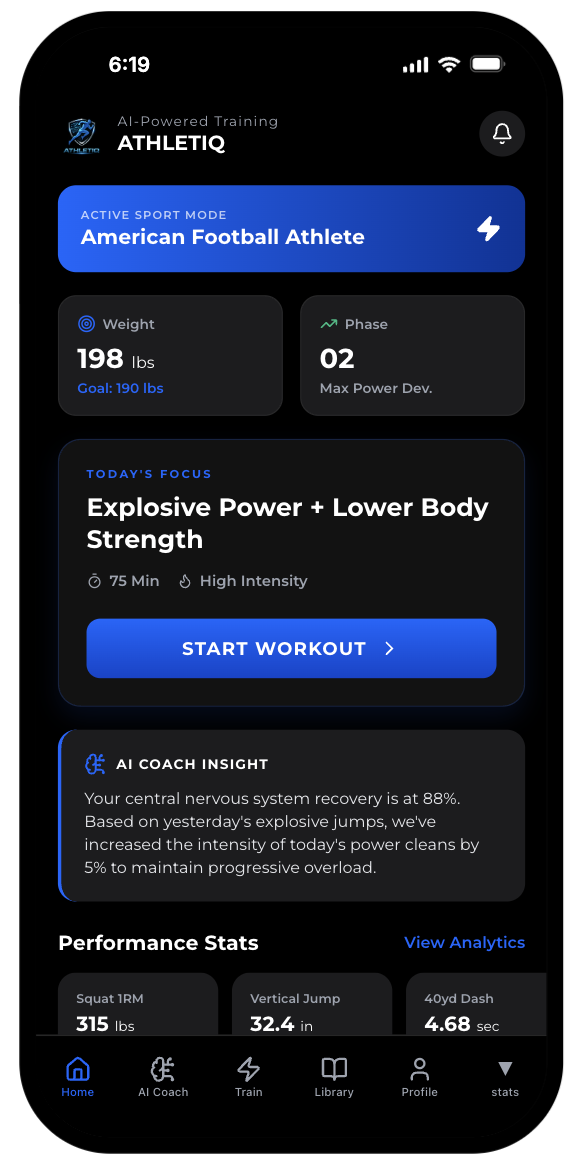
The solution: AthletIQ gives you a daily training plan that adjusts in real time based on your recovery, your performance trends, and your goals. A readiness score tells you whether to push hard, go moderate, or recover. An AI coach you can actually talk to answers questions like "what should I train today?" and adjusts the plan instantly. Sport-specific modes for rugby, soccer, gym, and general fitness mean the programming actually reflects how your body is being used.

The build: Started in January 2026. The dashboard shows your active sport mode, today's focus session, AI coach insights, and key performance stats. Strength trends, vertical jump, sprint times: everything in one place, with context. Target launch mid-July 2026.

Value proposition: "AthletIQ doesn't track your fitness. It runs it."

AthletIQ app interface

04 - Internship Work

Avolta

Travel Retail • Data Strategy • Category Management

Luxury Retail Latin America Data Analysis Brand Negotiation

My summer at Avolta - the world's largest travel retail company - was my first real taste of global business operations at scale. Assigned to the cosmetic category management team for Latin America, I spent the summer inside the data: perfume sales across airport locations in Panama, Ecuador, Colombia, and Brazil.

The task: figure out which SKUs were underperforming and why. Then make recommendations on product selection and margin optimization. Simple enough on paper. In practice, it means understanding the nuances of a duty-free shopper in Panama City versus one in Bogotá - different purchasing habits, different price sensitivities, different brand affinities - and building an argument from the data upward.

I learned that luxury retail is not just about beautiful packaging and aspirational marketing. It's a data game. Which brands drive margin? Which locations over-index on certain price points? Where is conversion actually happening? I built pricing analyses and helped structure brand negotiation frameworks - the kind of analysis that feeds directly into decisions about which luxury brands get shelf space and at what terms.

Avolta taught me what it looks like to operate at scale: multiple countries, multiple currencies, multiple stakeholders, all at once. It also taught me that good category management is equal parts art and science - you need to know your customer, your competitor, and your data simultaneously, and move between all three without losing the strategic thread.

Visit Avolta →

05 - Startup Experience

One Padel
Indoor Club

Sports Business • Marketing • Operations

Startup Brand Building Community Miami

One Padel Indoor Club gave me something you cannot get in a classroom: the productive chaos of an early-stage business. I joined before the doors opened - helping with business planning, marketing strategy, and the operational groundwork of building a brand from scratch in a city that was just beginning to discover padel.

The reality of a startup: there is no playbook. You tracked financial transactions one day and coordinated a community tournament the next. You helped build the social media presence, managed vendor relationships, and then stayed late to figure out why the booking system wasn't working. The diversity of the work wasn't a distraction - it was the education.

Working without structure forced a kind of resourcefulness that structured environments rarely produce. When there's no precedent for a decision, you have to trust your judgment, move quickly, and learn from what doesn't land. That instinct - operating comfortably in ambiguity, executing before all the information is in - is something I now carry into every professional context I enter.

Padel was growing fast in Miami, and being inside a business trying to capture that wave early taught me a lot about timing, brand positioning, and what it takes to build community around a product. You can have the best facility in the city. If people don't feel ownership over the experience, they won't come back. We worked hard to make sure they did.

Visit One Padel →